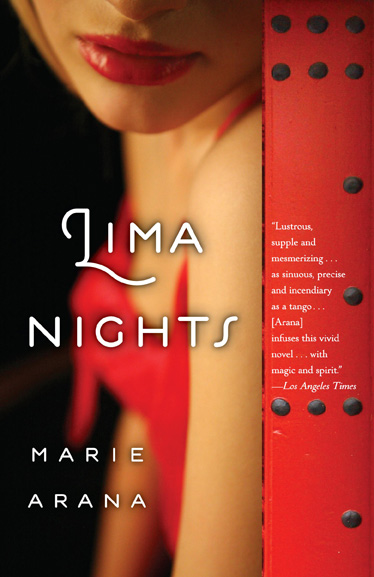
Lima Nights
“Erotic, catastrophic . . . Arana’s novel of taboo passion, tragic misperception, and life’s hidden dimensions is as shattering as it is seductive.”
A man and a woman meet in a seedy tango bar in Lima. She is poor, indigenous, beautiful, and far too young to be there; he is white, middle-aged, bored, and formerly very rich. As she lures him onto the floor for a tango, he cannot know that the dance will take him through equal portions of love, suffering, and betrayal that will last for twenty years. The story of Carlos and Maria is the age-old tale of forbidden love, but in Arana’s hands it is a spare and powerful instrument that takes on profound questions of racism, faith, and the hidden recesses of the human heart.
Carlos Bluhm leads the good life in upper-class Lima: He attends social functions with his elegant wife, goes out drinking with his three best friends, and has the occasional, fleeting assignation. Then he meets María Fernandez, a dancer at a tango bar in a rough part of town. The beautiful fifteen-year-old intoxicates him. An indigenous dark-skinned Peruvian, she represents everything his safe white world does not, and soon he can’t get her out of his mind. They begin a passionate affair, one that will destroy his marriage and shatter the only reality he’s ever known.
Flash forward twenty years: Against all odds, Carlos and María have remained together. But when María finally presses for a formal commitment, feelings long suppressed erupt in a tense endgame that sends both of them hurtling toward a dangerous resolution that will forever alter their lives.
Reading guide > • Read an excerpt >
Honors:
A Washington Post Best Book of the Year
Dial Press. Hardcover, 2009. ISBN 978-0-385-34258-2 • Paperback, 2010. ISBN 978-0-385-34259-9
Lima Nights en español:
La novela “Lima Nights” fue elegida por el periódico peruano “El Comercio” como una de las 5 mejores novelas del año 2013. Leer más.

Lima Nights, Animal de Invierno, Lima, Perú, 2013
ISBN: 978-612-46466-3-8
Carlos Bluhm, un empresario limeño de clase alta, se enamora de María Fernández, una hermosa bailarina de dieciséis años que atiende a clientes exclusivos. La pasión se intensifica; Bluhm pierde a su familia y gana la incomprensión de sus amigos. La misma relación con María se vuelve una espiral peligrosa. ¿Donde está la felicidad última para aquellos que cayeron una y otra vez? Lima Nights despliega una serie de episodios en los que se libran pequeñas batallas cotidianas relacionadas al amor, pero también nos habla de una tentación: la de perdernos llenos de goce en el mundo de nuestros deseos más escondidos.
“Como toda gran obra de literatura, Lima Nights te deja en la última pagina con preguntas de gran magnitud. . . Los protagonistas son mas que los dos amantes de la novela, son: una casa en San Isidro, un barrio en San Juan de Lurigancho, la ciudad de Lima entera . . . ” JULIO ZAVALA, Director de Ibero, en la Feria de Libros, Lima, Perú, 3 de agosto
“Una novela brillante, flexible y que hipnotiza, Lima Nights es tan sinuosa, precisa e incendiaria como un tango. Marie Arana crea esta vívida historia con una energía encantadora”.
THE LOS ANGELES TIMES
“Un enamoramiento que trasgrede leyes étnicas generacionales y diferencias de clase muy antiguas. Con la hábil percepción de Marie Arana, sus personajes se lanzan hacia un clímax que es, a la vez, inevitable y sorpresivo”.
THE WASHINGTON POST
“Marie Arana ha dejado su huella en toda su obra… Al mismo tiempo despliega la virtuosidad de sus tradicionales dotes como escritora: sobriedad, claridad y una decidida pasión por las alegorías”.
THE NEW YORK TIMES